The Lily: six of everything, and one in the middle
Six coloured parts, six stamens swinging on their stalks, one style rising through the centre. Nothing is hidden and nothing is small. Build the lily and you build the textbook flower — and then a wall painting older than the alphabet, a tiny panel in New York, a pond at Giverny and a bulb field on the Pacific coast all fall into place.
Build the ARTOYA Lily and every organ of a flower is in your hand: tepals, hinged anthers, a three-lobed stigma. From there we follow the lily to Minoan walls, to Botticelli's Annunciation, past Monet's pond, and to the Easter lily's islands.
« Having seen it is not as good as knowing it; knowing it is not as good as doing it. » — Xunzi, 3rd century BC
1What you are building
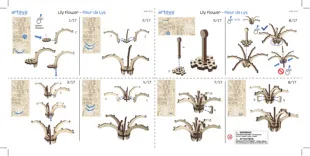
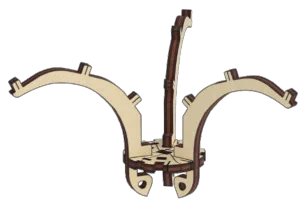
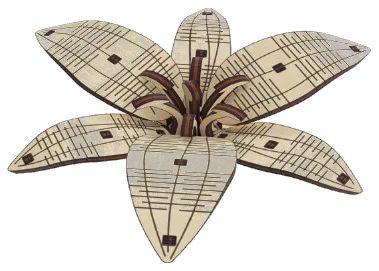
The ARTOYA Lily is a 26-piece model in birch plywood, cut and marked on a single board. It takes about thirty minutes, in the order printed on the sheet in the box: check that every piece is on the board; press out each one only when the sheet calls for it; build the flower head first — the hub and six curved ribs, then the style, then six tepals and six anthers; join the stem sections, add the leaf, and slot the head on top; and paint last, once it stands, or keep it plain. Once built, it stays built.
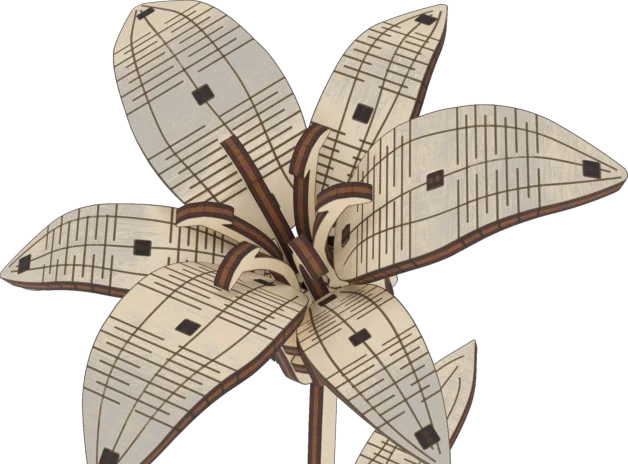
Let's be honest about what it is not. It is not a botanically exact model of any species: proportions are simplified so that every part reads clearly and the wood holds together, and a real lily's tepals curve and its anthers swing, which plywood does not. A flower to learn from, not a specimen. What it gives in return is flower anatomy — petal, sepal, stamen, pistil — learned by building it rather than by labelling a diagram, plus colour mixing if you paint it. Age 14+, and no two finished models are alike.
Sources ARTOYA leaflet AV0118135 (approved copy) · Royal Botanic Gardens, Kew — kew.org · Royal Horticultural Society — rhs.org.uk
2Six tepals, six anthers, one style
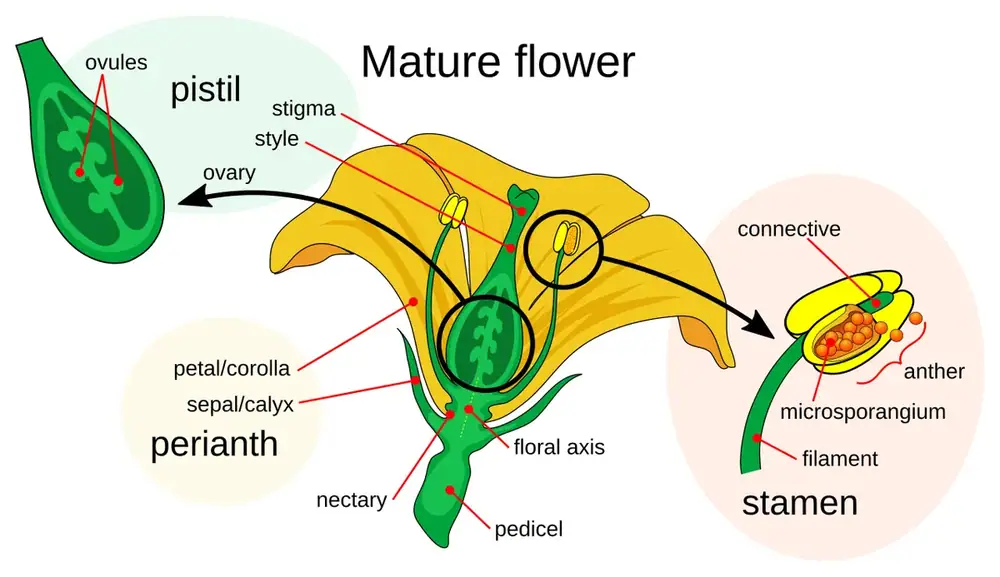
Most flowers have an outer ring of green sepals and an inner ring of coloured petals. The lily has both rings, three and three, but they look so alike that botanists stop trying to tell them apart and call all six tepals. Britannica's definition is exactly that: sepals and petals "very similar in appearance and not easily distinguishable", with the lily as its first example. So the six blades you fit onto the ribs are three sepals and three petals wearing the same colour.
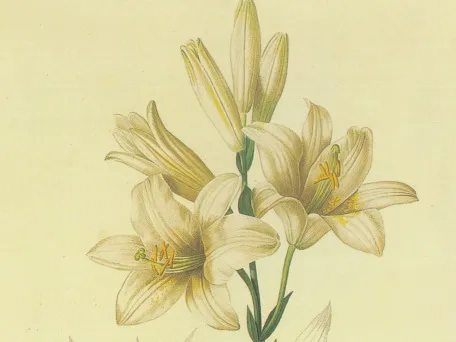
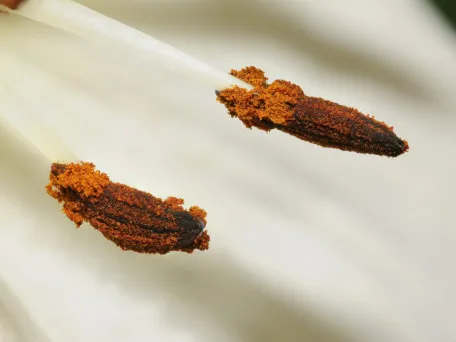
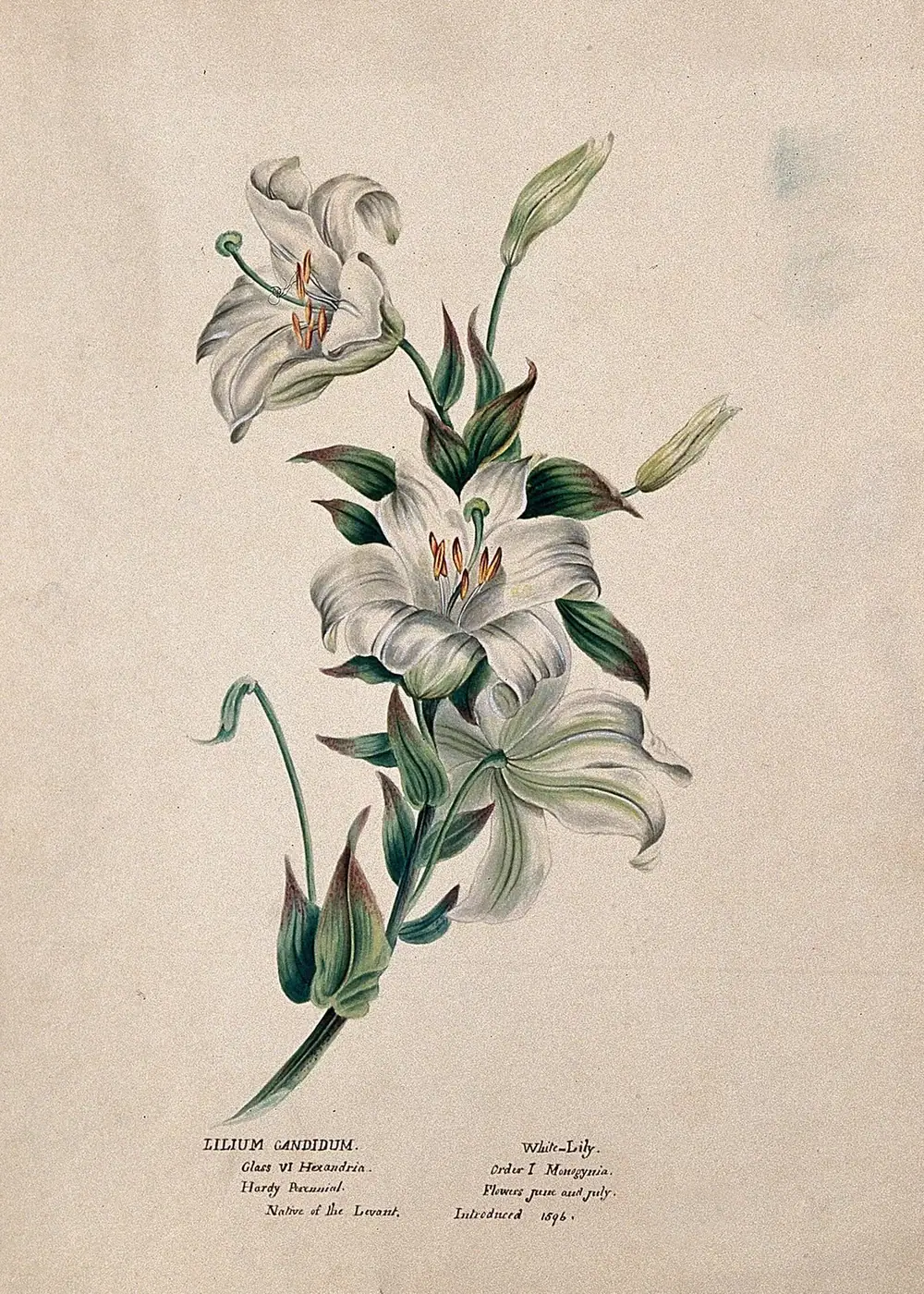
Inside the ring stand six stamens, each a long filament with an anther on top. The anther is not fixed rigidly to its stalk: North Carolina State University's plant guide calls lily anthers "dorsifixed and versatile" — attached at the back, near the middle, so the whole anther tips like a seesaw. Brush past one and it pivots to dust you with pollen — the mechanism your six anther pieces stand in for.
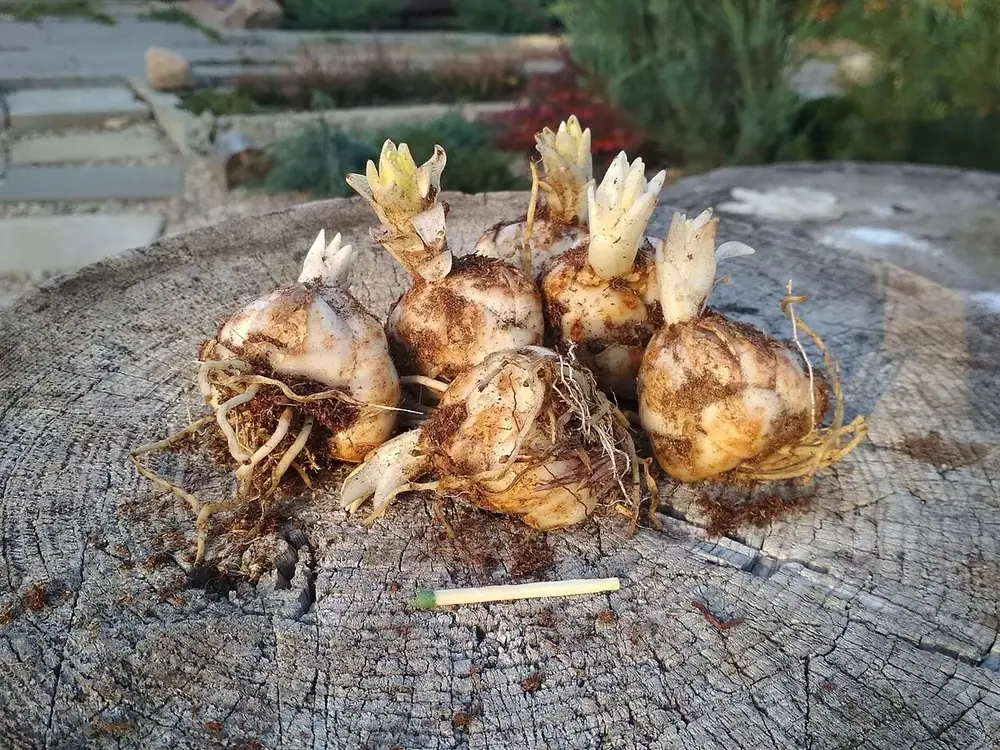
In the centre, one style rises from the ovary to a sticky, three-lobed stigma: the landing pad for pollen from another flower. Everything grows from a scaly bulb with no papery skin, just loose fleshy scales — and the RHS turns that into a gardener's trick: snap a few scales from a mature bulb in late summer, "as close as possible to the base", bag them in damp compost and grit, and keep them warm and dark, about 21 °C, for six weeks. Small bulblets form at the base of each scale, and each one is a new lily.
Look at your model. The hub is the ovary; the six curved ribs carry the six tepals; the upright at the centre is the style; the six small pieces around it are the anthers. Nothing on a real lily hides inside a tube or under a hood, which is why this is the flower to learn the parts on.
Sources Encyclopaedia Britannica — britannica.com, "tepal" and "stamen" · North Carolina State University Extension — plants.ces.ncsu.edu, "Lilium" · Royal Horticultural Society — rhs.org.uk, "Bulbs: propagation" · Royal Botanic Gardens, Kew — kew.org
3Older than the alphabet
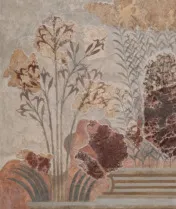
The lily was painted on walls before the Greeks could write about it. Around 1600 BC two Minoan painters chose the same flower. On the island of Thera, in Greece, the Spring fresco from Akrotiri shows volcanic rocks, red lilies in clusters of three, and seven swallows — the National Archaeological Museum in Athens, Greece, where it now hangs, reads it as the arrival of spring, "in March or April, when the flowers blossom and migratory birds return". On Crete, in the villa at Amnisos, another painter set white lilies in front of a stepped structure that the Heraklion Archaeological Museum, Greece, takes for a formal walled garden. He scraped the outline of each stem and flower into the plaster with a pointed tool and filled the groove with thick white paint.
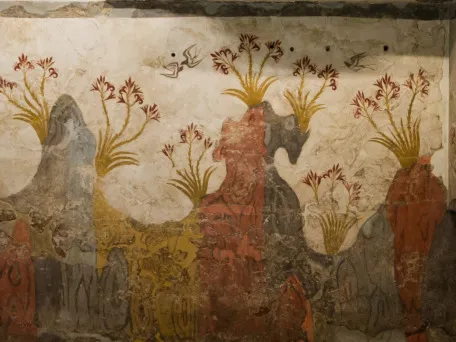
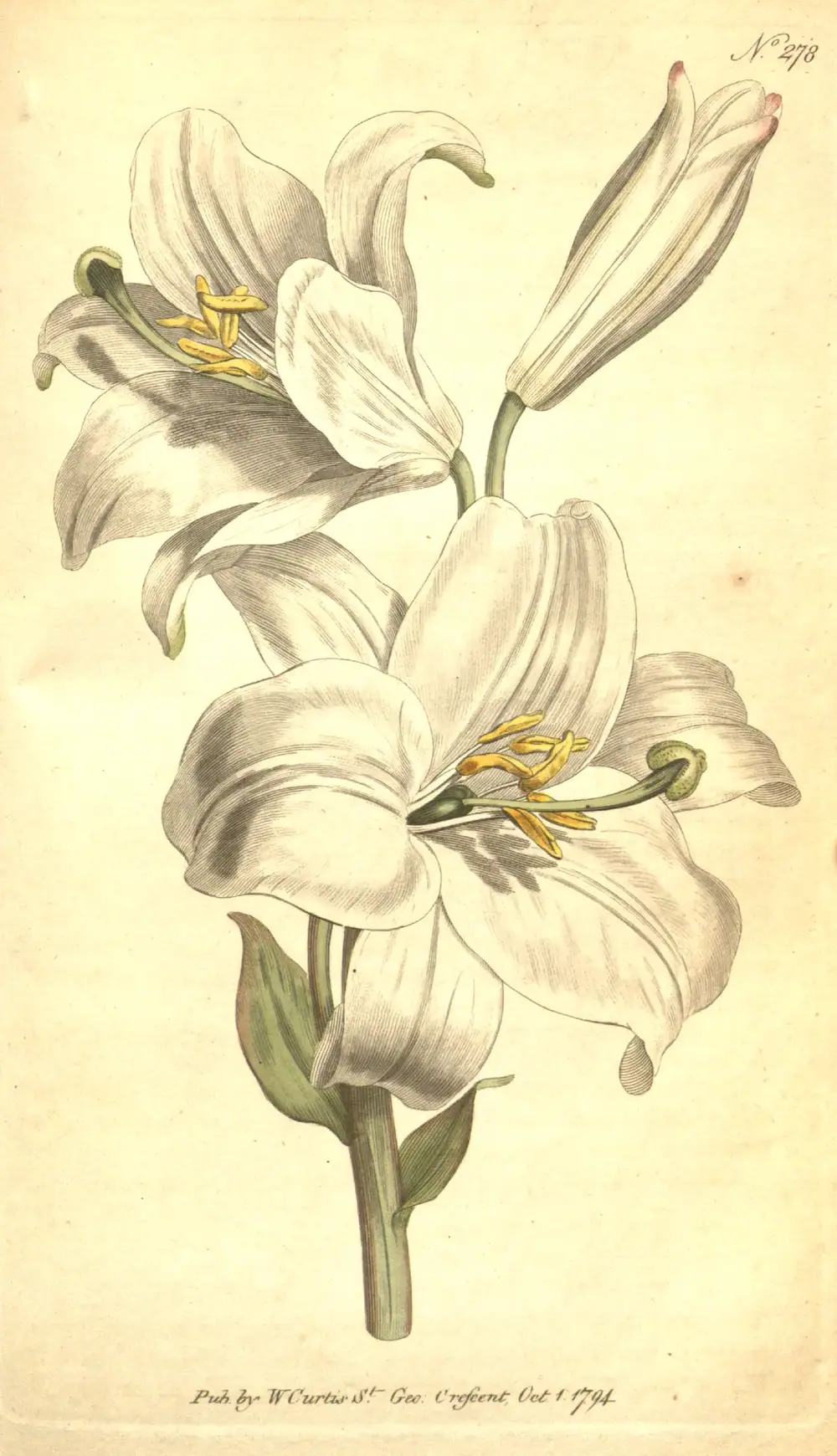
Which lily? Botanists in the Journal of Experimental Botany read those Cretan flowers beside their "step-like bands" as Lilium candidum, the Madonna lily, whose wild range Kew gives as southern North Macedonia to south-west Türkiye, and Lebanon to Israel. Asia Minor — where, as the leaflet says, the bulb was boiled into an ointment in the second millennium BC — is modern Turkey, at the heart of that range. The geographer Strabo praised lily bulbs as a remedy against snakebite. And when Charlemagne's court listed the plants every imperial estate should grow, the same journal counts 73 of them, "almost exclusively useful and medicinal plants", with lilium in first place. Eleven centuries later William Curtis, in his Botanical Magazine of 1794, still ranked the white lily "among the very oldest inhabitants of the flower-garden".


Sources National Archaeological Museum, Athens — namuseum.gr, "Flirtation in nature" (Spring fresco, Akrotiri) · Heraklion Archaeological Museum — heraklionmuseum.gr, "Lily Fresco" · Royal Botanic Gardens, Kew — powo.science.kew.org, "Lilium candidum L." · Journal of Experimental Botany — academic.oup.com, "Symbolism of plants", 2009 · Curtis's Botanical Magazine, vol. 8, plate 278 (1794) — biodiversitylibrary.org
4The flower of the Annunciation
By the Middle Ages the white lily had become the particular flower of the Virgin Mary — Britannica records it as her symbol of purity and the origin of the name Madonna lily. So when a painter needed to say this is the Annunciation without a caption, a stem of lilies did the job.

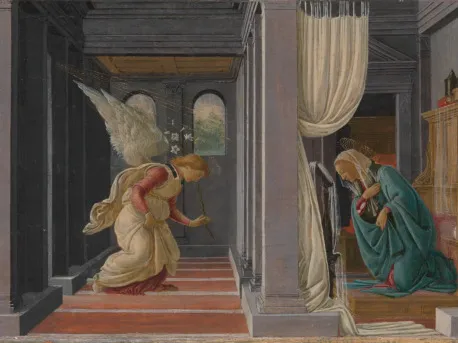
Botticelli's panel at the Metropolitan Museum of Art in New York, United States — our cover picture — is a good place to see how little space that takes. It is small — 19.1 by 31.4 centimetres, tempera and gold on wood, painted about 1490 — and built on one-point perspective, with pillars dividing Gabriel's side of the picture from the Virgin's private room, where she kneels with a book of hours. Look closely and you can still see the lines Botticelli scored into the surface to plan it. Who commissioned it is unknown; it came to the Met with the Robert Lehman Collection in 1975. Botticelli was not the first Florentine to give Gabriel the flower: in Leonardo's Annunciation in the Uffizi, Florence, Italy, painted around 1472–75, the angel also holds a Madonna lily.
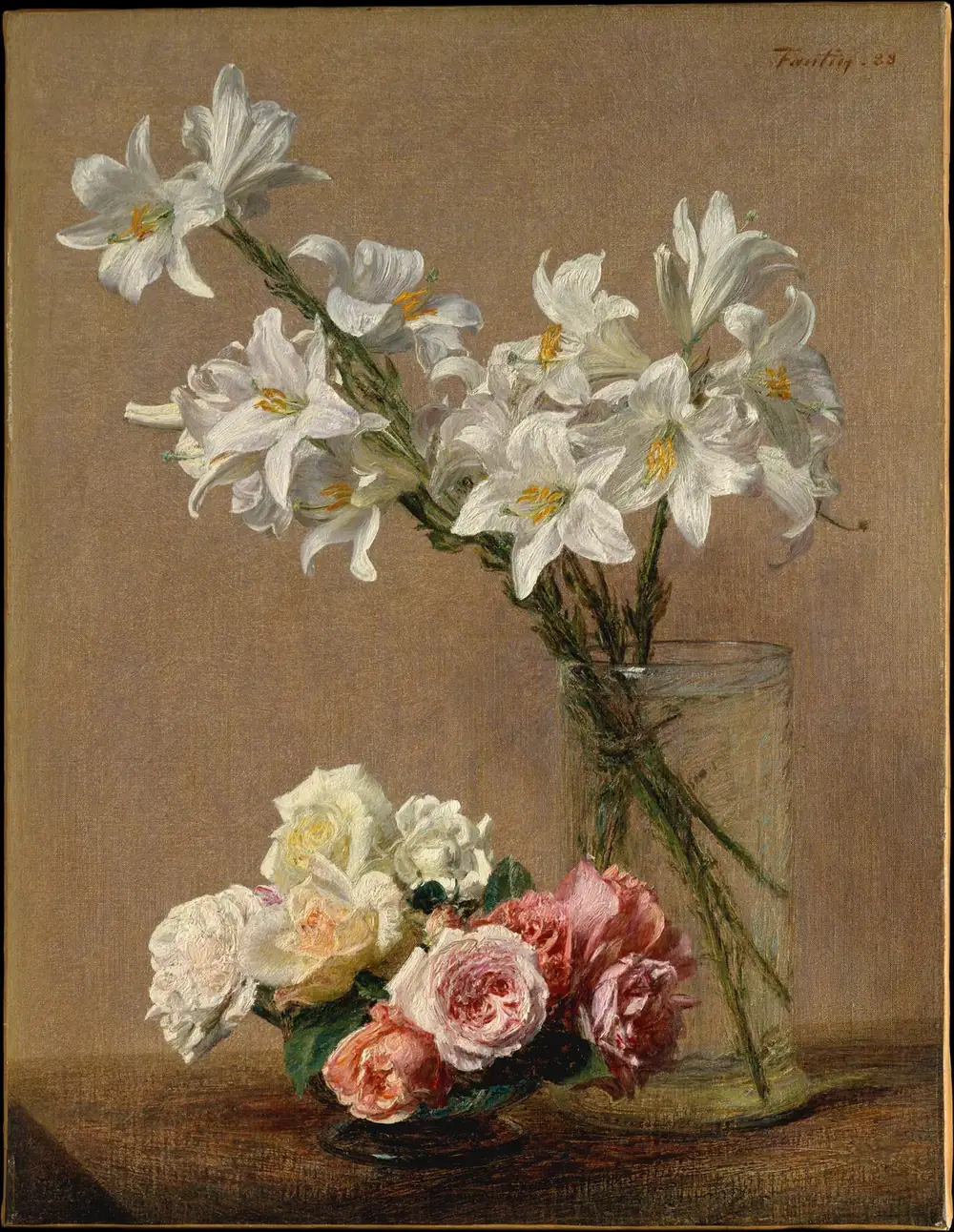

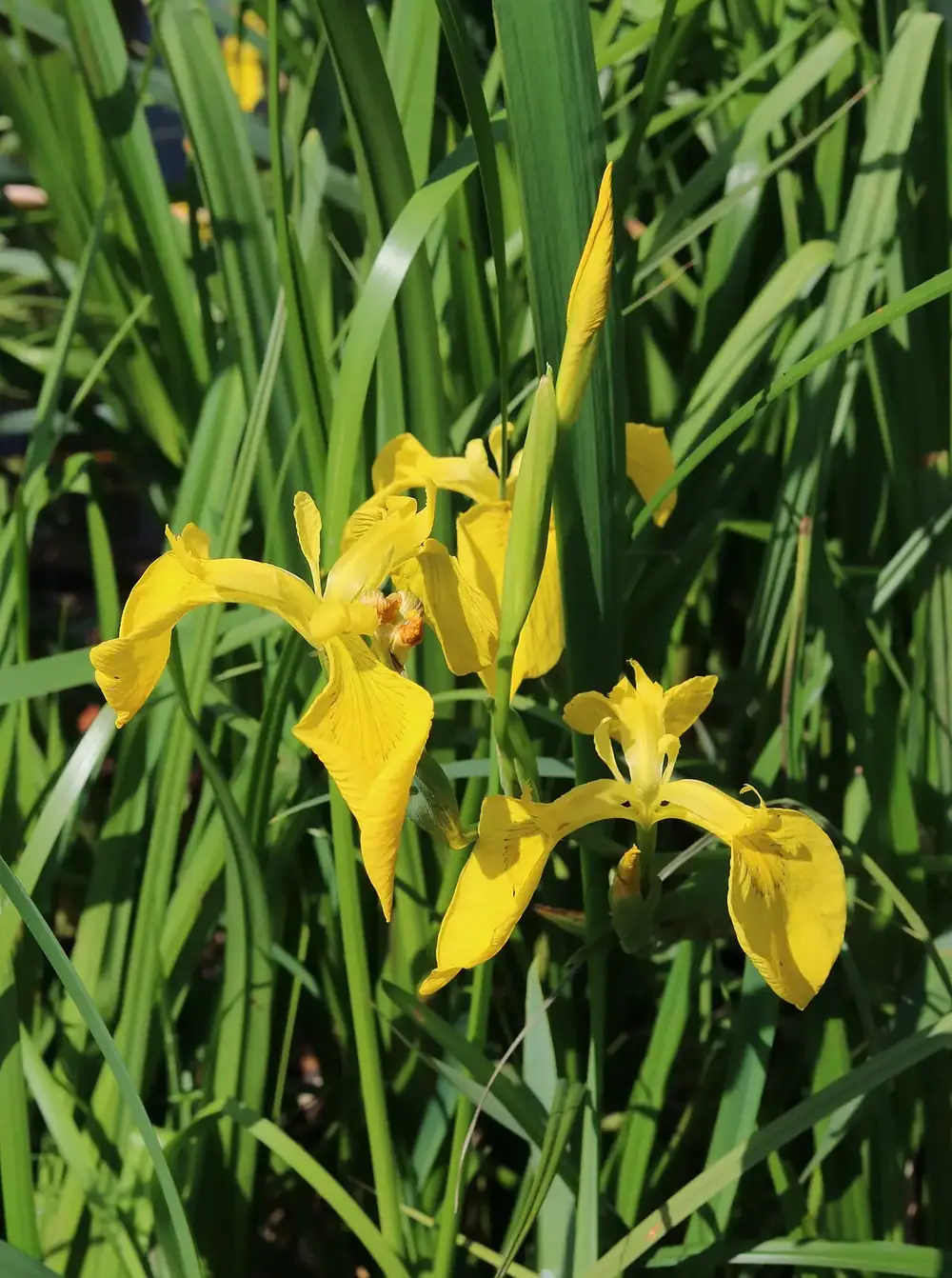
The lily kept its place in painting long after it stopped carrying a message. Henri Fantin-Latour's Roses and Lilies of 1888, also at the Met, is simply a still life, worked, the museum notes, with the butt of the brush and scrapers as well as the bristles. As for the fleur-de-lis: the name says lily, but, as our Iris leaflet explains, the shape is most likely the yellow flag iris of the riverbank.
Sources The Metropolitan Museum of Art — metmuseum.org, "The Annunciation", 1975.1.74, and "Roses and Lilies", 2001.202.4 · Encyclopaedia Britannica — britannica.com, "lily" · Journal of Experimental Botany — academic.oup.com, "Symbolism of plants", 2009
5Handle with care
Two practical facts follow from section 2. The first is pollen. Those swinging anthers shed pollen that stains fabric for good, which is why florists snip them off before the flowers are sold. Breeders have gone one step further: the RHS lists "pollen-free" lilies, double flowers in which the stamens are replaced by extra petals.
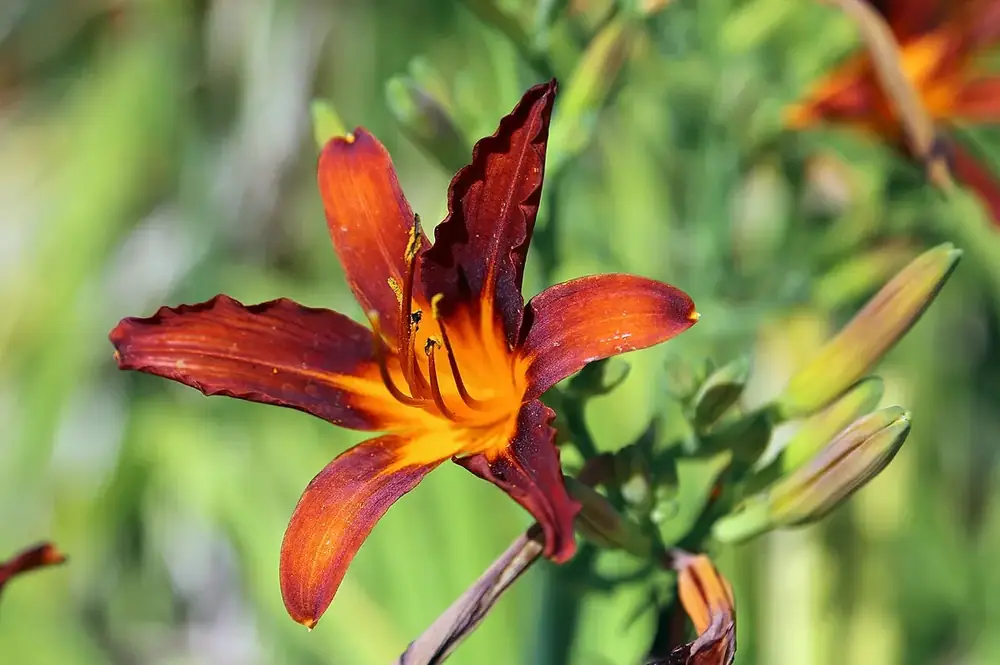
The second is cats, and here the calm answer is the strict one. Every part of a true lily — petal, leaf, stem, pollen licked off the fur, even the water in the vase — can cause kidney failure in cats. International Cat Care puts the first signs — drooling, vomiting, refusing food, tiredness — within one to six hours; the US Food and Drug Administration says kidney failure can follow "in less than 3 days" after a cat has eaten "just a small amount of a leaf or flower petal". Both give the same instruction: call a vet immediately and treat it as an emergency. Two things the leaflet has no room for: pollen-free lilies are not a safe option, because the toxin is in the whole plant, not the pollen; and the daylily, Hemerocallis, which is not a Lilium at all, is just as dangerous. Dogs, the FDA adds, get at most a stomach upset — this is a cat problem.
Sources Royal Horticultural Society — rhs.org.uk, "How to grow lilies" · International Cat Care — icatcare.org, "Lily poisoning in cats" · US Food and Drug Administration — fda.gov, "Lovely Lilies and Curious Cats: A Dangerous Combination"
680 to 100 wild species, all northern
Britannica counts 80 to 100 wild species of Lilium, every one native to the temperate northern hemisphere. Kew's Plants of the World Online currently accepts 124 — botanists keep splitting and merging — and traces the range from the temperate north as far south as the northern Philippines. They are upright perennials with leafy stems, mostly 30 to 120 centimetres tall, though some pass two and a half metres, and the six tepals fold into three shapes: a trumpet (Madonna lily, Easter lily), a turban with the tepals rolled right back (the Turk's cap lilies), or an open bowl.
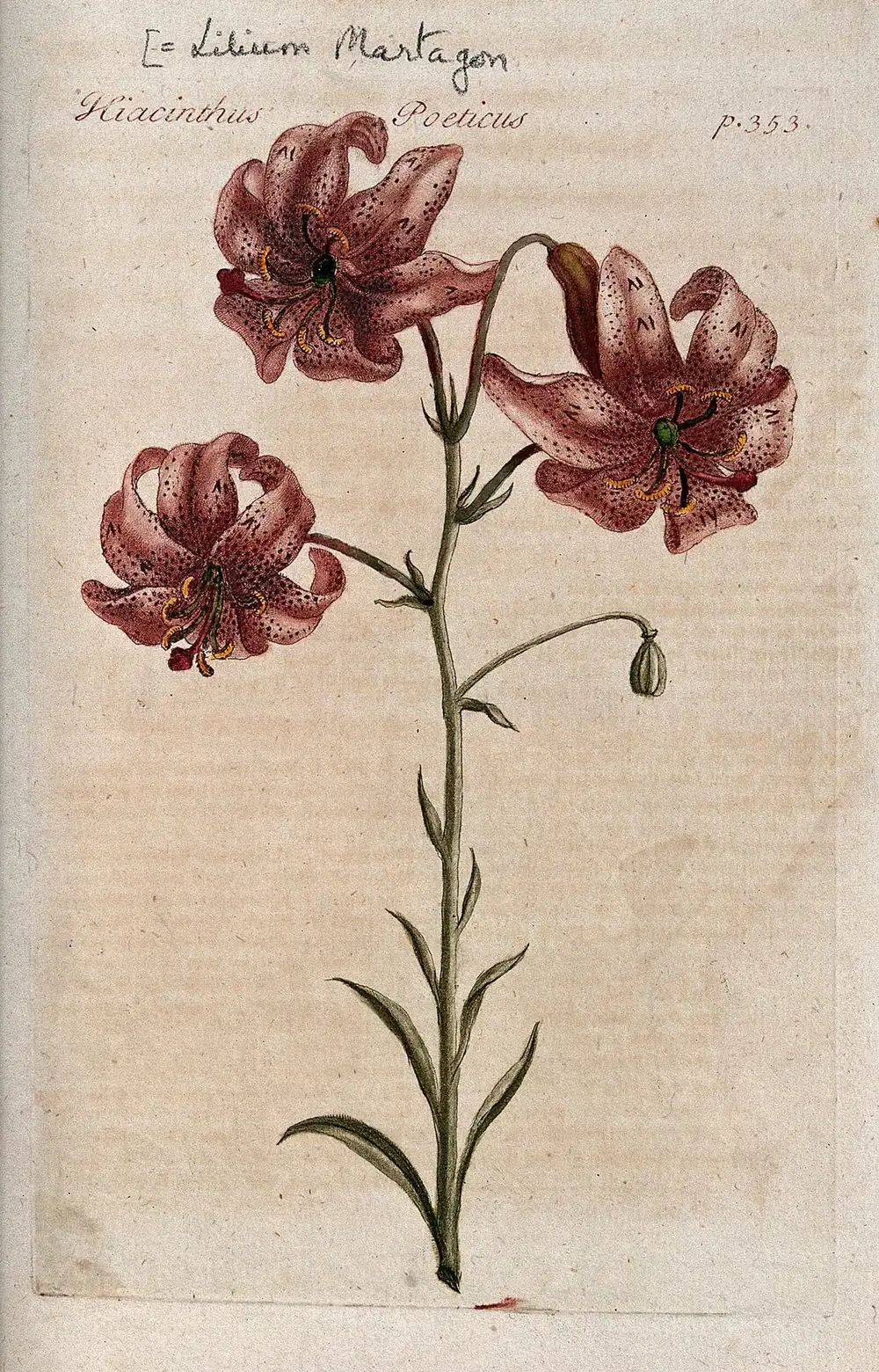
Not every "lily" belongs: several amaryllis relatives borrow the name, while the true lilies sit in Liliaceae with the tulip and the fritillary. In the garden the genus splits again, by the RHS's account, into two great groups of hybrids: the Asiatics, tough, bright yellow to red and unscented, and the Orientals, large, mostly pink and white and highly scented. The scent you smell after dark is the Oriental side of the family.
Sources Encyclopaedia Britannica — britannica.com, "lily" · Royal Botanic Gardens, Kew — powo.science.kew.org, "Lilium Tourn. ex L." · Royal Horticultural Society — rhs.org.uk, "How to grow lilies" · North Carolina State University Extension — plants.ces.ncsu.edu, "Lilium candidum"
7Try this
Count a florist's lily. Lay a single cut lily beside your model. Count the tepals, then look for the anthers. What to notice: six tepals but often no anthers — the florist has removed them — and the six bare filaments they stood on, plus the one style with its three-lobed tip.
Make a lily from a scale. In late summer, snap two or three scales from a lily bulb close to its base, bag them with damp compost and grit, and leave them in a warm, dark cupboard for six weeks. What to notice: tiny bulblets on the broken edge of each scale — a whole plant from one piece of a bulb, no seed involved.
Paint a documented lily. Choose a lily you can check: the white of Lilium candidum, the red lilies in threes on the Akrotiri Spring fresco, or the spotted orange of the tiger lily. Mix the colour before you touch the model; tepals first, anthers last, paint out of the slots. What to notice: on a white lily the anthers are the only colour, so a real one and a plywood one are read the same way — six small dots of pollen colour on a white ground.
Sources Royal Horticultural Society — rhs.org.uk, "Bulbs: propagation" and "How to grow lilies" · National Archaeological Museum, Athens — namuseum.gr · Wellcome Collection — wellcomecollection.org, 22166i · ARTOYA leaflet AV0118135
8Words to know
- Tepal — a sepal or petal where the two look alike; a lily has six.
- Sepal — one of the outer ring, usually green; on a lily, coloured like a petal and alternating with the three true petals.
- Stamen — the pollen-making organ: a filament with an anther on top; six on a lily.
- Anther — the pollen-bearing head of the stamen; on a lily hinged near its middle ("versatile") so it swings.
- Style — the stalk carrying the stigma up from the ovary; one on a lily.
- Stigma — the sticky surface that receives pollen; three-lobed on a lily.
- Bulb (scaly) — an underground store of fleshy scales with no papery skin; each scale can grow a new plant.
- Bulbil — a small bulb formed in a leaf axil that drops off and grows; the tiger lily's way of spreading.
- Forcing — growing a plant under controlled warmth and light so it flowers on a chosen date; every lily in bloom at Easter has been forced.
- Water lily — not a lily: Nymphaea, a floating plant of the family Nymphaeaceae; Monet's Nymphéas.
Sources Encyclopaedia Britannica — britannica.com, "tepal", "stamen", "lily" and "water lily" · North Carolina State University Extension — plants.ces.ncsu.edu, "Lilium" and "Lilium lancifolium" · Missouri Botanical Garden — missouribotanicalgarden.org, "Lilium longiflorum" · Royal Horticultural Society — rhs.org.uk
9Sources
- Encyclopaedia Britannica — "lily" (plant): https://www.britannica.com/plant/lily
- Encyclopaedia Britannica — "tepal": https://www.britannica.com/science/tepal
- Encyclopaedia Britannica — "stamen": https://www.britannica.com/science/stamen
- Encyclopaedia Britannica — "water lily" (family Nymphaeaceae, about 60 species in 4 genera): https://www.britannica.com/plant/water-lily
- Royal Botanic Gardens, Kew — Plants of the World Online, Lilium Tourn. ex L. (124 accepted species; native range "Temp. Northern Hemisphere to N. Philippines", re-read 29 Sep 2026): https://powo.science.kew.org/taxon/urn:lsid:ipni.org:names:30009317-2
- Royal Botanic Gardens, Kew — Plants of the World Online, Lilium candidum L.: https://powo.science.kew.org/taxon/urn:lsid:ipni.org:names:537512-1
- Royal Botanic Gardens, Kew — Plants of the World Online, Lilium longiflorum var. longiflorum (native range "Japan (Yakushima, Tanegashima) to Philippines (Batan Islands, N. Luzon)"): https://powo.science.kew.org/taxon/urn:lsid:ipni.org:names:77170379-1
- Royal Horticultural Society — "How to grow lilies": https://www.rhs.org.uk/plants/lilies/how-to-grow-lilies
- Royal Horticultural Society — "Bulbs: propagation": https://www.rhs.org.uk/plants/types/bulbs/propagation
- North Carolina State University Extension — "Lilium": https://plants.ces.ncsu.edu/plants/lilium/
- North Carolina State University Extension — "Lilium candidum": https://plants.ces.ncsu.edu/plants/lilium-candidum/
- North Carolina State University Extension — "Lilium lancifolium (Tiger Lily)" (native to far eastern Russia, Tibet, China, Korea and Japan; "bulbils — one in every leaf axil — that drop to the ground and grow"; tagged "problem for cats"): https://plants.ces.ncsu.edu/plants/lilium-lancifolium/
- Chicago Botanic Garden — "Lilium lancifolium (Tiger Lily)" (bulbils flower about two years after collection; "The bulbs are edible, and these plants have been cultivated in Asia as a food crop"): https://www.chicagobotanic.org/plant-information/plant-finder/lilium-lancifolium-tiger-lily
- University of Wisconsin–Madison, Division of Extension — "Easter Lily, Lilium longiflorum" (native to the Ryukyu islands of southern Japan; Thunberg 1777, England 1819; Bermuda by the 1880s, Japan by 1900, US production after the US entered WWII; growers on the California–Oregon border; 'Nellie White' named by James White for his wife; bulbs grown 3 or 4 years; flowers 3 to 7 in long, 12 to 15 on a vigorous plant): https://hort.extension.wisc.edu/articles/easter-lily-lilium-longiflorum/
- University of Illinois Extension — Emily Swihart, "Easter lilies: war, global production, and the Midwest landscape", Good Growing, 11 April 2025 (Ryukyu archipelago; about 1200 US growers at the peak, ten today; Smith River valley, south-west Oregon and north-west California, about 600 acres; two to three years in the field; greenhouse stage begins 23 weeks before Easter): https://extension.illinois.edu/blogs/good-growing/2025-04-11-easter-lilies-war-global-production-and-midwest-landscape
- Missouri Botanical Garden — Plant Finder, Lilium longiflorum (trumpet lily; flowers 5–7 in long; "Easter lilies that are in bloom on Easter have been forced"): https://www.missouribotanicalgarden.org/PlantFinder/PlantFinderDetails.aspx?taxonid=281896
- National Archaeological Museum, Athens — "Flirtation in nature" (Spring fresco, Akrotiri): https://www.namuseum.gr/en/monthly_artefact/flirtatious-pairs-in-nature/
- Heraklion Archaeological Museum — "Lily Fresco" (Amnisos): https://heraklionmuseum.gr/en/exhibit/lily-fresco/
- Journal of Experimental Botany — "Symbolism of plants: examples from European-Mediterranean culture presented with biology and history of art", 2009: https://academic.oup.com/jxb/article/60/7/1893/683161
- Curtis's Botanical Magazine, vol. 8, plate 278, Lilium candidum (1794) — Biodiversity Heritage Library item 7356: https://www.biodiversitylibrary.org/item/7356 (text also transcribed at Project Gutenberg: https://gutenberg.org/files/24670/24670-h/24670-h.htm)
- The Metropolitan Museum of Art — Botticelli, The Annunciation, ca. 1490, 1975.1.74: https://www.metmuseum.org/art/collection/search/459016
- The Metropolitan Museum of Art — Henri Fantin-Latour, Roses and Lilies, 1888, 2001.202.4: https://www.metmuseum.org/art/collection/search/437996
- Art Institute of Chicago — Claude Monet, Water Lilies, 1906, oil on canvas, 89.9 × 94.1 cm, 1933.1157 (water garden made three years after the 1890 purchase; around 250 paintings; preparation for the Orangerie murals 1914–1926): https://www.artic.edu/artworks/16568/water-lilies
- Musée de l'Orangerie, Paris — "History of the Water Lilies cycle" (letter to Clemenceau 12 November 1918, the day after the Armistice; contract 12 April 1922 for 19 panels; eight compositions, about 200 m² and nearly 100 linear metres; two elliptical rooms; displayed 1927, a few months after Monet's death in 1926): https://www.musee-orangerie.fr/en/node/33
- Musée de l'Orangerie, Paris — "The Water Lilies by Claude Monet": https://www.musee-orangerie.fr/en/node/197502
- International Cat Care — "Lily poisoning in cats": https://icatcare.org/articles/lily-poisoning-in-cats
- US Food and Drug Administration — "Lovely Lilies and Curious Cats: A Dangerous Combination": https://www.fda.gov/animal-veterinary/animal-health-literacy/lovely-lilies-and-curious-cats-dangerous-combination
- Wellcome Collection — "Turk's-cap lily (Lilium martagon): flowering stem. Colour and coloured mezzotint, c. 1741", 25314i: https://wellcomecollection.org/works/q7kpr8pa
- Wellcome Collection — "Madonna lily or bourbon lily (Lilium candidum): flowering stem. Watercolour, ca. 1850 (?)", 22164i: https://wellcomecollection.org/works/fz3gbkvg
- Wellcome Collection — "Tiger lily (Lilium lancifolium): flowering stem. Watercolour, ca. 1850 (?)", 22166i: https://wellcomecollection.org/works/r5ekehdk
- Wikimedia Commons — "Claude Monet - Water Lilies - 1933.1157 - Art Institute of Chicago.jpg" (work public domain; reproduction CC0): https://commons.wikimedia.org/wiki/File:Claude_Monet_-Water_Lilies-1933.1157-_Art_Institute_of_Chicago.jpg
- Wikimedia Commons — "Easter lily (Lilium longiflorum).jpg", Dandy1022, 2021, CC BY-SA 4.0: https://commons.wikimedia.org/wiki/File:Easter_lily_(Lilium_longiflorum).jpg
- ARTOYA leaflet AV0118135 (approved EN copy, printed 21 Sep 2026) and its printed sources: Britannica "lily"; Journal of Experimental Botany 2009; Kew; RHS; The Met 1975.1.74; International Cat Care; Akrotiri Spring fresco (photo Jebulon, CC0); Redouté, Les Liliacées; Thomas Bresson (CC BY 3.0); Amnisos fresco (photo Gleb Simonov, CC0).
ARTOYA Education Platform · artoya.co/lily · Download the leaflet and the lesson plan at myartventure.com/a/AV0118135 · [email protected]